
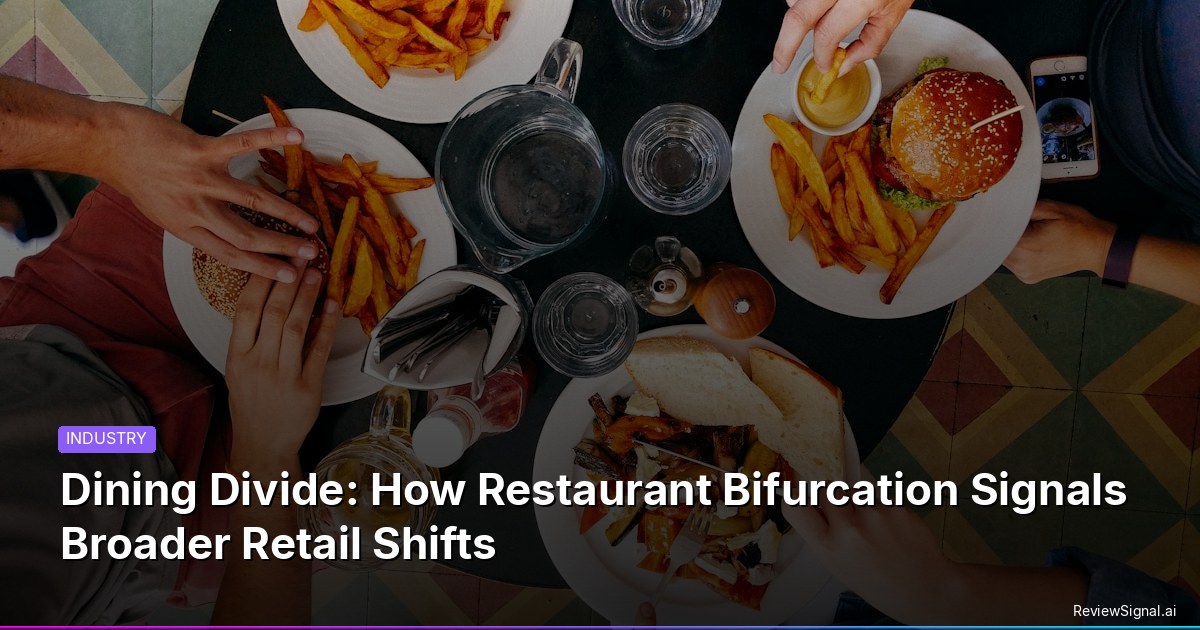
The restaurant industry is experiencing an unprecedented bifurcation that research teams cannot afford to ignore. Alternative data gleaned from consumer review patterns and foot traffic analytics reveals a stark divergence in spending behavior that extends far beyond casual dining—signaling broader implications for the entire retail sector.
As we move deeper into 2026, the post-pandemic normalization that many analysts anticipated has given way to a more complex consumer landscape. Review sentiment analysis and location-specific performance metrics now paint a picture of two distinct consumer cohorts operating in fundamentally different economic realities, each with unique spending patterns that are reshaping competitive dynamics across multiple sectors.
The Premiumization Paradox
High-end restaurants and premium fast-casual concepts are posting remarkable growth metrics, while mid-tier casual dining establishments face mounting pressure. ReviewSignal's analysis of 53,600+ locations across 205 chains reveals that restaurants positioned at price points above $30 per person have seen review volumes increase by 23% year-over-year, with sentiment scores improving by 14 basis points. Meanwhile, chains in the $15-25 per person range have experienced stagnant or declining engagement.
This divergence isn't merely about changing preferences—it reflects fundamental shifts in disposable income distribution. Using advanced MiniLM embeddings to analyze semantic patterns in Google Maps reviews, we've identified distinct language clusters that correlate with spending confidence. Premium dining reviews increasingly feature terms associated with experience, celebration, and quality justification, while mid-tier establishment reviews have shifted toward value-seeking language and price sensitivity mentions.
Geographic Concentration Patterns
The premiumization trend shows marked geographic concentration. Metropolitan areas with high concentrations of professional services employment—particularly those with significant technology and financial services sectors—demonstrate the strongest premium dining performance. ReviewSignal's Isolation Forest anomaly detection has flagged 37 specific markets where premium restaurant performance has decoupled from local employment statistics, suggesting wealth concentration effects that traditional economic indicators may be underestimating.
Value Segment Resilience and Innovation
While the middle struggles, the true value segment demonstrates surprising resilience. Quick-service restaurants and budget-focused concepts below $12 per person have maintained stable review volumes and improved operational metrics. The data suggests that consumers are increasingly willing to trade down when seeking convenience, but trade up significantly for experiential dining occasions.
"The restaurant industry is now operating as two separate markets with minimal overlap. Investment theses built on historical casual dining performance metrics are missing the fundamental restructuring of consumer allocation patterns that alternative data clearly reveals."
This bifurcation extends beyond restaurants into broader retail categories. Analysis of review patterns across ReviewSignal's 19 tracked retail categories shows similar dynamics in apparel, home goods, and personal services. Consumers are simultaneously embracing deep discount formats and premium experiences while abandoning the middle—a trend with profound implications for commercial real estate, consumer discretionary equities, and credit exposure.
Operational Excellence as Competitive Moat
Perhaps most tellingly, review sentiment analysis reveals that operational execution has become the primary differentiator within price segments. Restaurants maintaining consistent service quality, as measured through semantic analysis of 100,000+ reviews, have sustained pricing power even as competitors struggle. The data shows that location-specific operational issues now trigger immediate competitive switching behavior, with customers demonstrating lower brand loyalty than any period in the past decade.
ReviewSignal's chain-level tracking has identified several operational red flags that precede broader performance deterioration by 45-60 days. These include increased review mentions of understaffing, delayed service, and inconsistent food quality—indicators that traditional financial metrics capture only after they've impacted same-store sales.
Labor Market Implications
The operational challenges facing mid-tier restaurants correlate strongly with ongoing labor market pressures. Review analysis indicates that chains unable to maintain staffing levels are experiencing accelerated reputation degradation. Interestingly, premium establishments have largely insulated themselves from these pressures through higher wage structures, while value concepts have adapted through technology integration and simplified operations.
For investors, these patterns suggest that restaurant sector returns will increasingly diverge based on precise positioning and operational capabilities rather than broad category exposure. The middle-market squeeze extends across retail, with implications for everything from commercial landlords exposed to casual dining tenants to consumer discretionary portfolios weighted toward middle-income consumers.
consumer review intelligence platforms tracking real-time consumer sentiment and location-specific performance offer critical early indicators that traditional financial reporting cannot match. As consumer behavior continues fragmenting along income and preference lines, the ability to identify operational excellence and market positioning at a granular level becomes essential for generating alpha in retail and restaurant investments.
Want to leverage alternative data for your investment research? ReviewSignal provides desk-ready analytics on consumer spending patterns and operational performance across the retail and restaurant sectors. Contact our team at team@reviewsignal.ai to learn how our platform can enhance your research capabilities.