
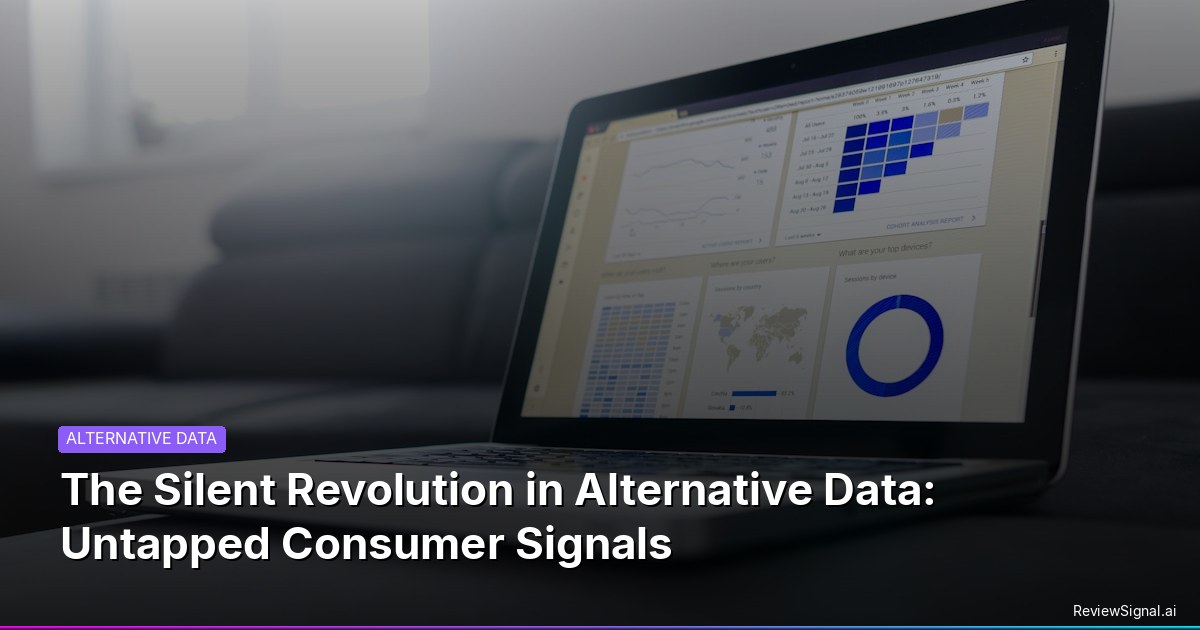
The alternative data landscape has undergone a remarkable transformation over the past decade. What began with credit card transactions and satellite imagery has expanded into an ecosystem of unconventional data sources that provide research teams with unprecedented market intelligence. As traditional datasets become increasingly commoditized, sophisticated investors are turning their attention to a data source hiding in plain sight: consumer sentiment expressed through online reviews.
While most research teams have focused on structured transaction data and web traffic metrics, a growing cohort of quantitative funds is discovering that unstructured consumer feedback contains predictive signals that can anticipate earnings surprises, identify operational deterioration, and detect competitive shifts weeks or months before they appear in financial statements.
The Evolution Beyond Traditional Alternative Data
The first wave of alternative data adoption centered on relatively straightforward metrics: foot traffic from mobile location data, credit card spending patterns, and satellite-derived inventory counts. These datasets offered clear, quantifiable advantages but came with significant costs and rapidly diminishing alpha as adoption spread across the industry.
The second wave, emerging now in 2026, is characterized by natural language processing applied to massive unstructured datasets. Consumer reviews on platforms like Google Maps represent a particularly rich vein of intelligence. Unlike curated corporate communications or carefully managed social media presence, reviews capture authentic customer experiences at scale—both the enthusiasm of delighted patrons and the frustration of disappointed consumers.
Modern platforms like ReviewSignal leverage advanced embedding models such as MiniLM to transform millions of text reviews into quantifiable sentiment metrics and topical analyses. By tracking 53,600+ locations across 205 chains spanning 19 categories, these systems can identify emerging patterns that telegraph operational issues or competitive advantages long before they impact reported revenue.
From Anecdotal to Analytical
The challenge with review data has historically been separating signal from noise. A single negative review means nothing; a systematic deterioration in service quality across a chain's locations means everything. Advanced anomaly detection algorithms, including techniques like Isolation Forest, can now identify statistically significant deviations in review patterns that warrant investor attention.
Consider a restaurant chain experiencing supply chain disruptions that affect food quality at 30% of its locations. Traditional financial metrics won't capture this until the next quarterly report—and even then, management might attribute weakness to "macroeconomic headwinds." Review analytics, however, will detect the spike in complaints about food quality, longer wait times, and menu availability within days of the problem emerging.
Practical Applications for Investment Strategies
Forward-thinking research teams are integrating review-based alternative data into their investment processes across multiple timeframes and strategies. Long-short equity portfolios use sentiment trends to inform position sizing, adding conviction to longs showing improving customer sentiment and reducing exposure to shorts where review trends suggest potential recovery.
"The most valuable alternative data sources in 2026 aren't the most expensive or exclusive—they're the ones that capture authentic human behavior at scale. Consumer reviews represent unfiltered market research conducted continuously across every geography and demographic."
Event-driven investors employ review analytics to assess integration success in retail mergers, detecting whether acquired locations maintain service quality or experience disruption during the transition. Sector specialists in restaurants, retail, and hospitality use granular location-level data to identify same-store sales trends before official disclosure.
The dataset's value extends beyond traditional equity strategies. Credit analysts incorporate review trends into their assessment of retail borrowers, recognizing that sustained deterioration in customer satisfaction often precedes financial distress. Options traders use sudden shifts in review velocity or sentiment as potential catalysts for near-term volatility.
Geographic and Demographic Granularity
One particularly powerful aspect of platforms processing 100,000+ reviews continuously is the ability to segment insights by geography and demographic cohort. A national chain might show stable aggregate metrics while experiencing severe problems in specific regions or with particular customer segments. This granularity enables more sophisticated thesis development and risk management.
The Road Ahead: Integration and Innovation
As we progress through 2026, the integration of review-based alternative data into institutional investment processes will accelerate. The funds generating alpha from these datasets today are those that have invested in the infrastructure to ingest, process, and act on insights systematically rather than anecdotally.
The next frontier involves cross-dataset correlation—combining review sentiment with foot traffic, hiring trends from job postings, and management commentary from earnings calls to create composite signals with higher predictive power than any single source. Machine learning models trained on historical relationships between review patterns and subsequent financial performance continue to improve as datasets lengthen and algorithms evolve.
For research teams still relying exclusively on traditional datasets, the competitive disadvantage grows more pronounced each quarter. The question is no longer whether to incorporate alternative data sources like consumer reviews, but how quickly firms can build the capabilities to extract actionable intelligence from these increasingly essential signals.
The silent revolution in alternative data isn't happening in satellite constellations or payment processors—it's happening in the authentic, unfiltered feedback millions of consumers share daily about their experiences with the companies in your portfolio.
Ready to explore how consumer intelligence can enhance your investment process? Contact our team at team@reviewsignal.ai to learn how ReviewSignal delivers actionable insights from consumer review data.